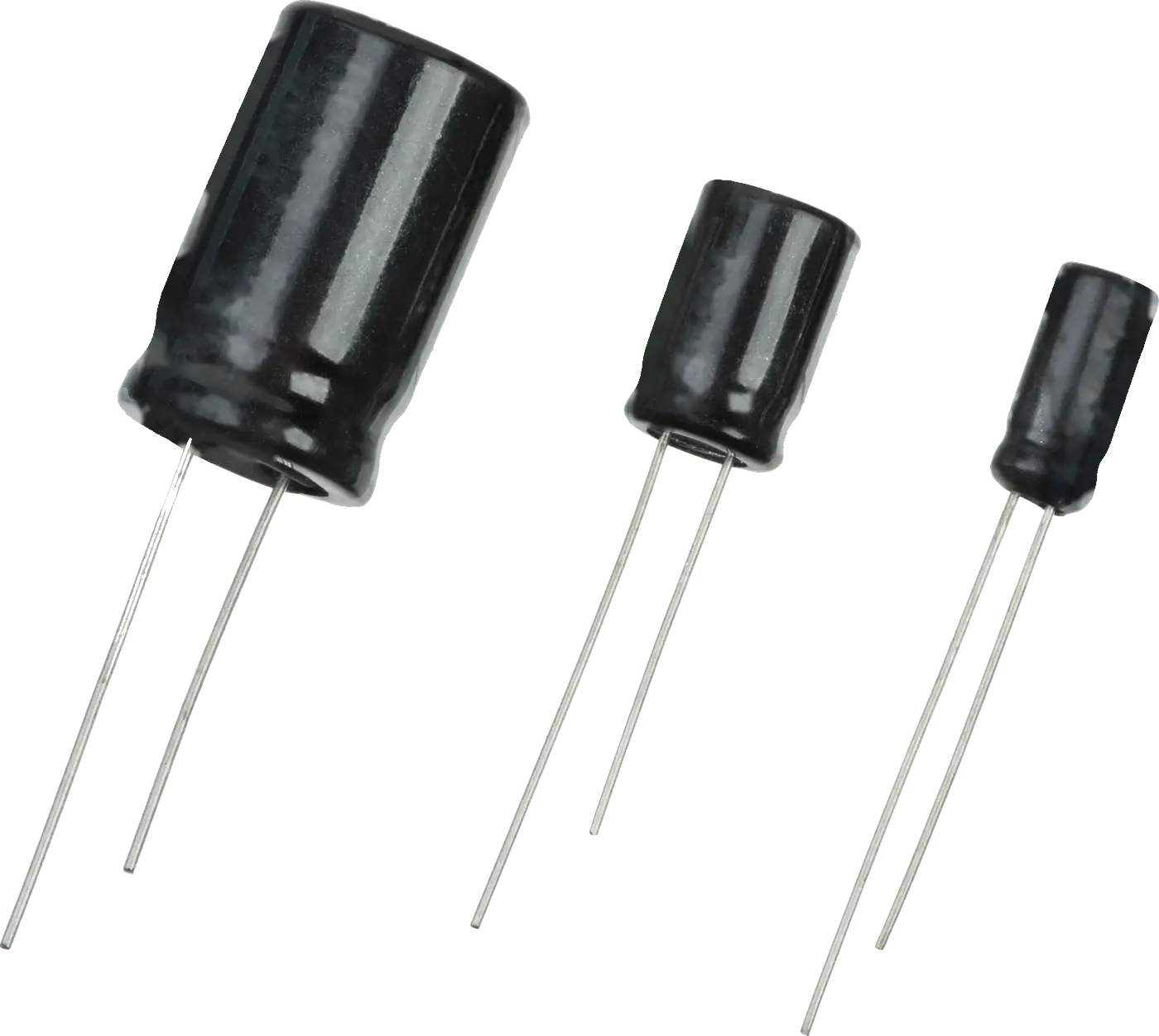
Electronic components
Electrolytic Capacitors
Electrolytic capacitors for filtering, smoothing and power-related electronic requirements.
- Polarised leads
- + / −
- Capacitance on the sleeve
- µF
- Voltage rating on the sleeve
- V
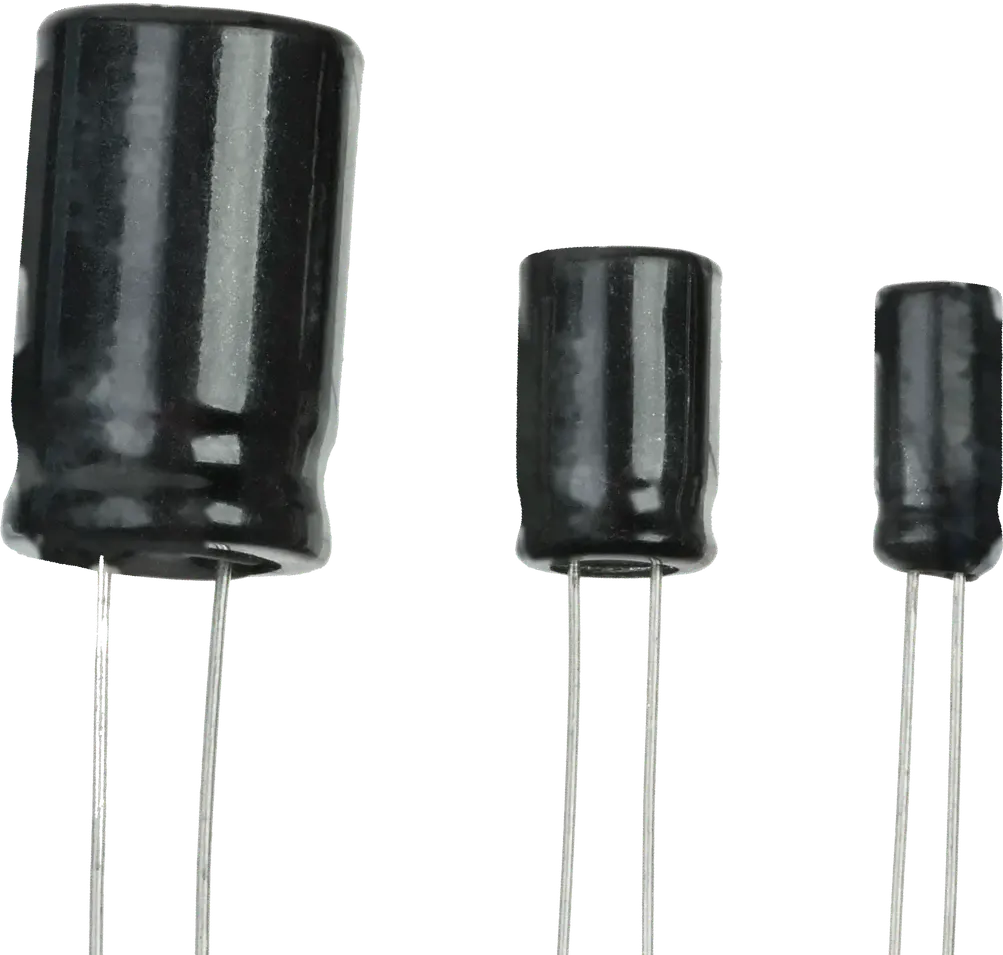
Definition
What is an electrolytic capacitor?
An electrolytic capacitor is a polarised capacitor commonly used where relatively high capacitance is required, particularly in power filtering and smoothing applications.
The most common type is the aluminium electrolytic capacitor, a cylindrical can marked with its capacitance in microfarads (µF) and its voltage rating. V Bright Electronics India handles electrolytic capacitor requirements in India, including replacements — share the markings, a photo or the specification and we’ll help identify suitable options.
Polarity
Understanding capacitor polarity
Most electrolytic capacitors are polarised: they have a positive and a negative lead and must be connected with the correct polarity, as shown on the component and in the circuit design.
- Negative stripe
- A band on the sleeve, often printed with minus signs, marks the negative lead.
- Lead length
- On new radial capacitors the positive lead is usually longer. Leads are often trimmed after fitting, so check the stripe too.
- Board marking
- Circuit boards usually mark the positive pad with + or shade the negative side of the outline.
- Non-polarised types
- Some electrolytic capacitors are bipolar (non-polarised), usually marked NP or BP.
Capacitors in power circuits can hold a charge after the equipment is switched off. If you’re unsure about polarity or the correct part, send us a photo of the capacitor and its markings.
Range
Electrolytic capacitor requirements
Requirements commonly include the following. Capacitance and voltage rating identify the part; size matters when it must fit an existing board.
General electrolytic capacitors
Aluminium electrolytic capacitors for general filtering and decoupling.
Radial through-hole
Cylindrical capacitors with both leads at one end, for through-hole boards.
SMD electrolytic
Surface-mount electrolytic capacitors, where your design uses them.
Replacement capacitors
Matching an existing capacitor by its markings, size and ratings.
Specific values
Need a particular capacitance and voltage? Send the specification or your BOM.
Send a specification

Applications
Where electrolytic capacitors are used
Electrolytic capacitors are found wherever a circuit needs bulk capacitance. Common applications include:
Power supply filtering
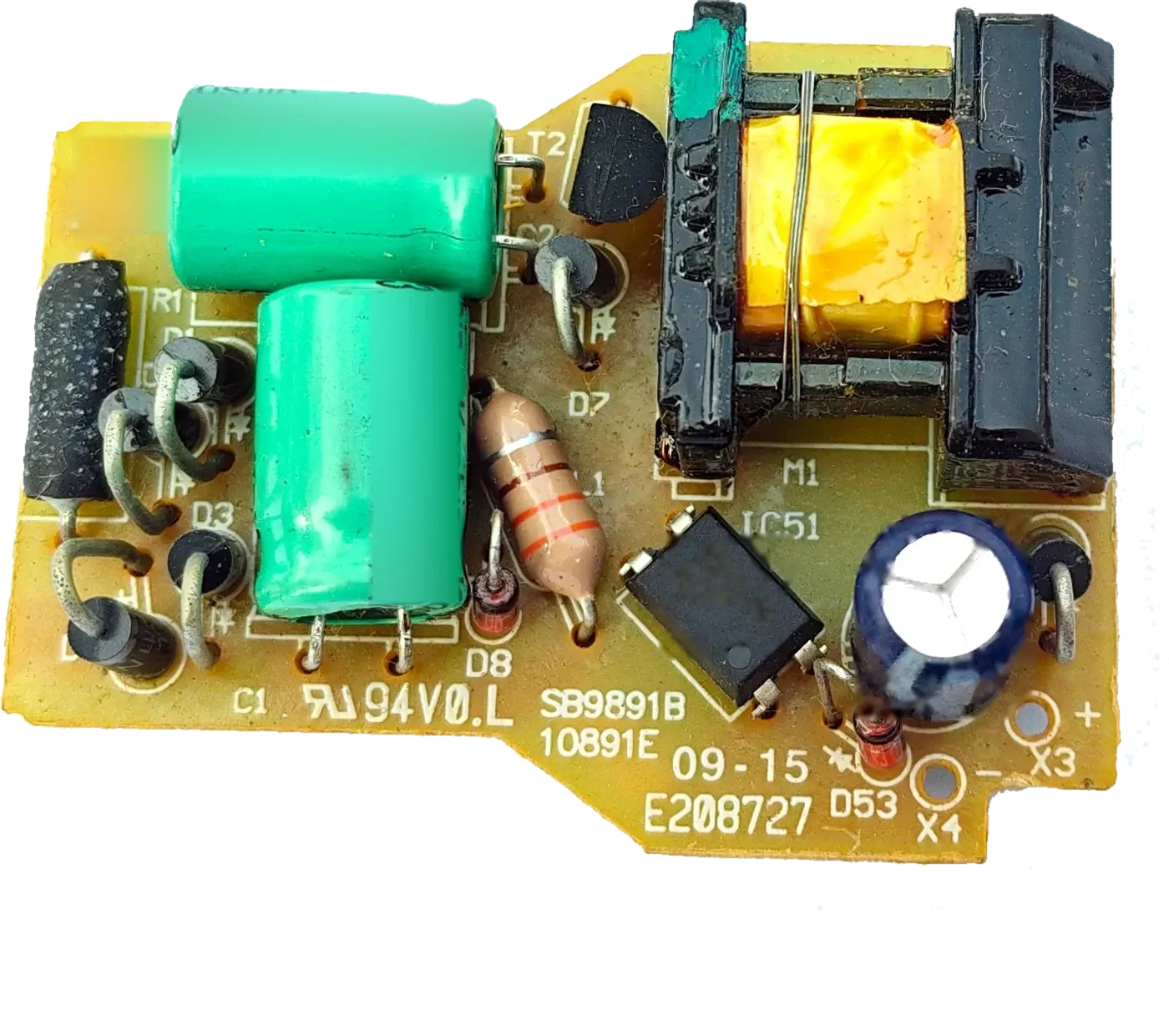
Smoothing the ripple after rectification in supplies and adapters.
Smoothing
Holding a steady DC level for the circuits that follow.
Decoupling
Bulk decoupling that supports a board’s supply during load changes.
Electronic equipment
Supply and audio stages in appliances and electronic devices.
Power circuits
Energy storage in drivers, inverters and LED power supplies.
Repair and replacement
Replacing aged or failed capacitors in existing equipment.
Selection
What to include for an electrolytic capacitor
These details identify an electrolytic capacitor. Most are printed on the sleeve.
Capacitance
The value in µF, as printed on the sleeve.
Voltage rating
The rated voltage, also printed on the sleeve; match or exceed the original.
Size
Diameter and height, if the capacitor must fit an existing board or enclosure.
Polarity and type
Polarised or non-polarised (bipolar), and radial or SMD.
Temperature rating
Only if known — it is often printed on the sleeve, such as 85 °C or 105 °C.
Part marking or photo
A clear photo showing all the markings on the sleeve.
Quantity
How many of each value you need.
FAQ
Questions about electrolytic capacitors
Have a question about a specific part? Ask us with the part number or a photo.
Ask on WhatsAppAre electrolytic capacitors polarised?
Most are. A polarised electrolytic capacitor has a positive and a negative lead and must be fitted the right way round. Bipolar (non-polarised) electrolytic types also exist, usually marked NP or BP.
What information is needed to replace an electrolytic capacitor?
The capacitance (µF) and voltage rating printed on the sleeve, plus the diameter and height if it must fit the same space. A clear photo of the markings helps, along with the quantity.
How do I find the negative lead?
Look for the stripe on the sleeve — it marks the negative side. On new radial capacitors the negative lead is also usually the shorter one.
Can I use a higher voltage rating than the original?
A higher voltage rating is generally acceptable when the capacitance matches and the size fits. Never use a lower voltage rating than the circuit requires.
What does the temperature rating mean?
It is the maximum operating temperature the capacitor is rated for, often 85 °C or 105 °C. Share it if it is printed on the original; it is not always required.
Can I send a BOM with electrolytic capacitors?
Yes. Send the complete BOM with values, voltage ratings and quantities, and V Bright Electronics India will help identify suitable options.
Replacing an existing capacitor?
Send a photo of the capacitor with its markings visible, its size or specification and the quantity, and we’ll help identify suitable options.