
Electronic components
Resistors
Resistors for current control, voltage division and general electronic circuit requirements.
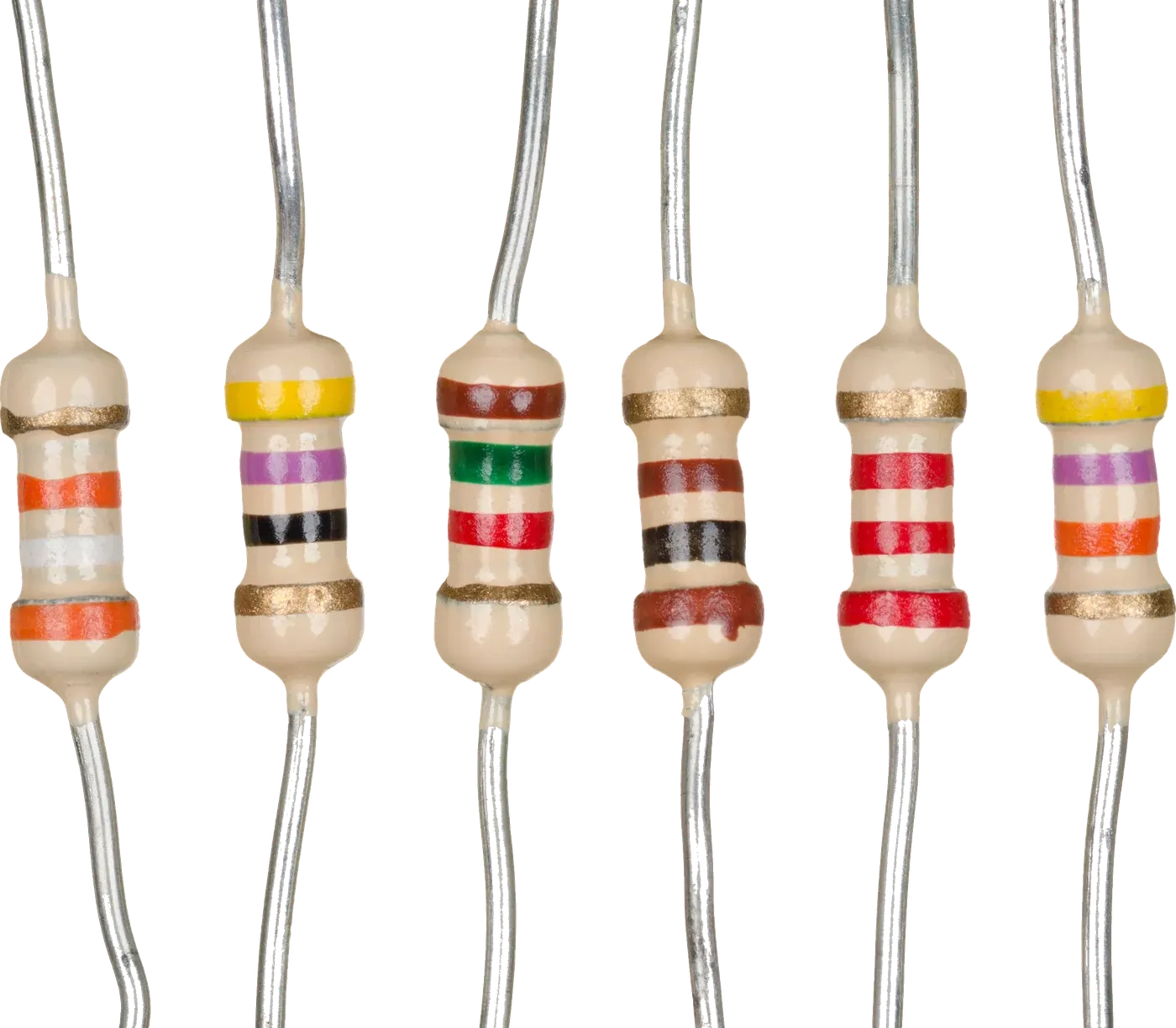
Definition
What is a resistor?
A resistor is a passive electronic component used to limit current, divide voltage and control electrical conditions within a circuit.
It does this by opposing the flow of current by a set amount — its resistance, measured in ohms (Ω). Resistors are among the most common parts on any circuit board. V Bright Electronics India handles resistor requirements in India for repair, production and project work; share the value, rating and package and we’ll help identify suitable options.
Range
Resistor requirements
Resistor requirements commonly include the categories below. The resistance value, tolerance and power rating identify the exact part.
Fixed resistors
Resistors with a single set value — the type used in most circuits.
Through-hole resistors
Axial resistors with wire leads, for through-hole boards, repairs and prototypes.
SMD resistors
Surface-mount chip resistors for compact and machine-assembled boards.
General-purpose resistors
Everyday resistors for current limiting, biasing and voltage division.
Specific values and ratings
Need a particular resistance, tolerance or power rating? Send the details or your BOM.
Send your values
Markings
What information is usually printed or specified for a resistor?
Every resistor is defined by its resistance value, tolerance and power rating. Through-hole resistors usually show the value and tolerance as coloured bands, SMD resistors usually carry a short numeric code, and the power rating is often indicated by size rather than printed.
- Resistance value
- In ohms (Ω), kilohms (kΩ) or megohms (MΩ). Shown by the digit and multiplier bands, or by a code on SMD parts — 102 means 10 × 10² Ω, or 1 kΩ.
- Tolerance
- How far the actual value may vary from the marked value, such as ±1% or ±5%. Usually the last band.
- Power rating
- The power the resistor can handle, in watts. Larger bodies generally handle more; check the datasheet or BOM.
- Package or type
- Through-hole or SMD, and the size or footprint that fits your board.
Bands hard to read? Send a clear photo, or the value from your circuit diagram or BOM.
Applications
Where resistors are used
Almost every electronic circuit uses resistors. Common applications include:
Current limiting
Keeping current within safe limits for LEDs, transistors and inputs.
Voltage division
Producing a lower, set voltage from a higher one.
Biasing
Setting the operating point of transistors and amplifier stages.
LED circuits
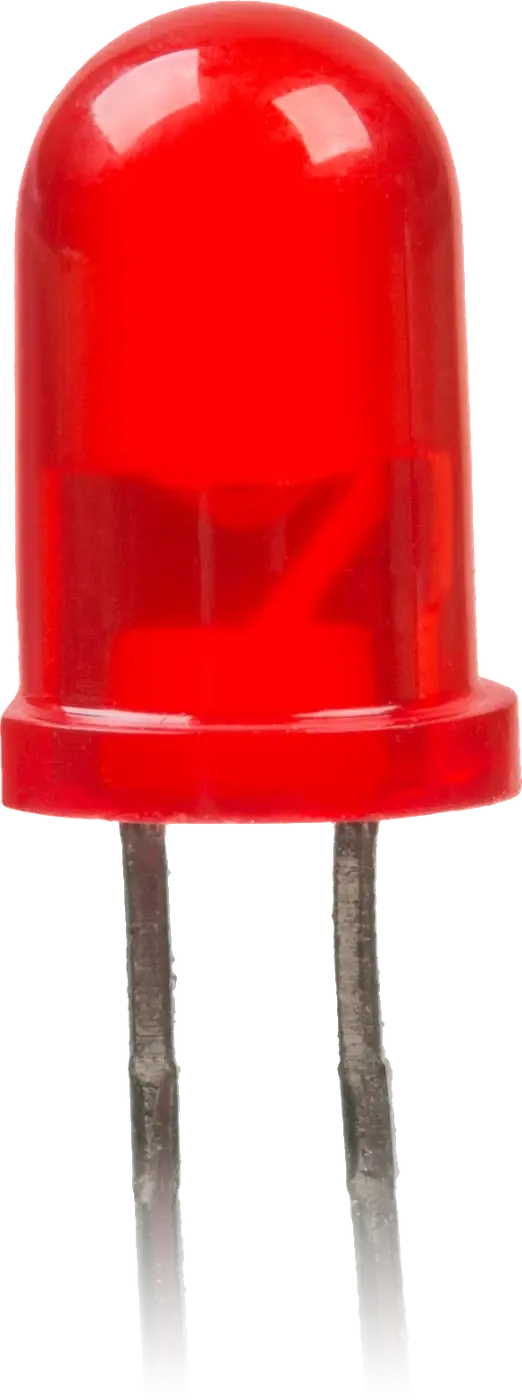
Series resistors that set the current through indicator and display LEDs.
Power supplies
Feedback, sensing and bleeder roles in supply circuits.
Control circuits
Pull-up, pull-down and timing roles on control boards.
Repair and replacement
Matching a burnt or failed resistor in existing equipment.
Selection
How to specify a resistor requirement
Share these details for each resistor. For several values, a BOM is the quickest way.
Resistance value
The value in Ω, kΩ or MΩ — or the colour bands or code on the existing part.
Tolerance
The accuracy you need, such as ±1% or ±5%, if your circuit specifies it.
Power rating
The wattage, or the size of the existing resistor if the rating isn’t marked.
Package and type
Through-hole or SMD, and the size or footprint.
Quantity
How many of each value — from a few pieces to production quantities.
Application
What the resistor does in the circuit, if you’re unsure of the rating.


FAQ
Questions about resistors
Have a question about a specific part? Ask us with the part number or a photo.
Ask on WhatsAppWhat does a resistor do?
It limits the current flowing in part of a circuit and can divide voltage. That lets designers set safe currents, bias transistors and create the voltages a circuit needs.
How do I specify a resistor requirement?
Give the resistance value, tolerance, power rating and package for each resistor, with the quantity. If you have a BOM or circuit diagram, send it along.
How do I read resistor colour bands?
On a common 4‑band resistor, the first two bands are digits, the third is the multiplier and the fourth is the tolerance. Brown, black, red and gold, for example, means 1 kΩ ±5%.
What is the difference between through-hole and SMD resistors?
Through-hole resistors have wire leads that pass through the board, which suits repairs and prototypes. SMD resistors mount directly on the board surface and are used on compact, machine-assembled boards.
Can I use a resistor with a higher power rating?
Generally yes, if the value and tolerance match and the larger body fits the board. A lower power rating than the original can overheat, so avoid it.
Can I send a list of resistor values?
Yes. Send the values, ratings and quantities as a list or BOM — including any other components — and V Bright Electronics India will help identify suitable options.
Need a specific resistor value or type?
Send the value, rating, package and quantity — or your complete BOM — and we’ll help identify suitable options.