
Electronic components
IC Sockets
Request DIP IC sockets for repair, prototyping and production across India. Share the IC package, pin count, row spacing, quantity and delivery city so we can check suitable options and quote.
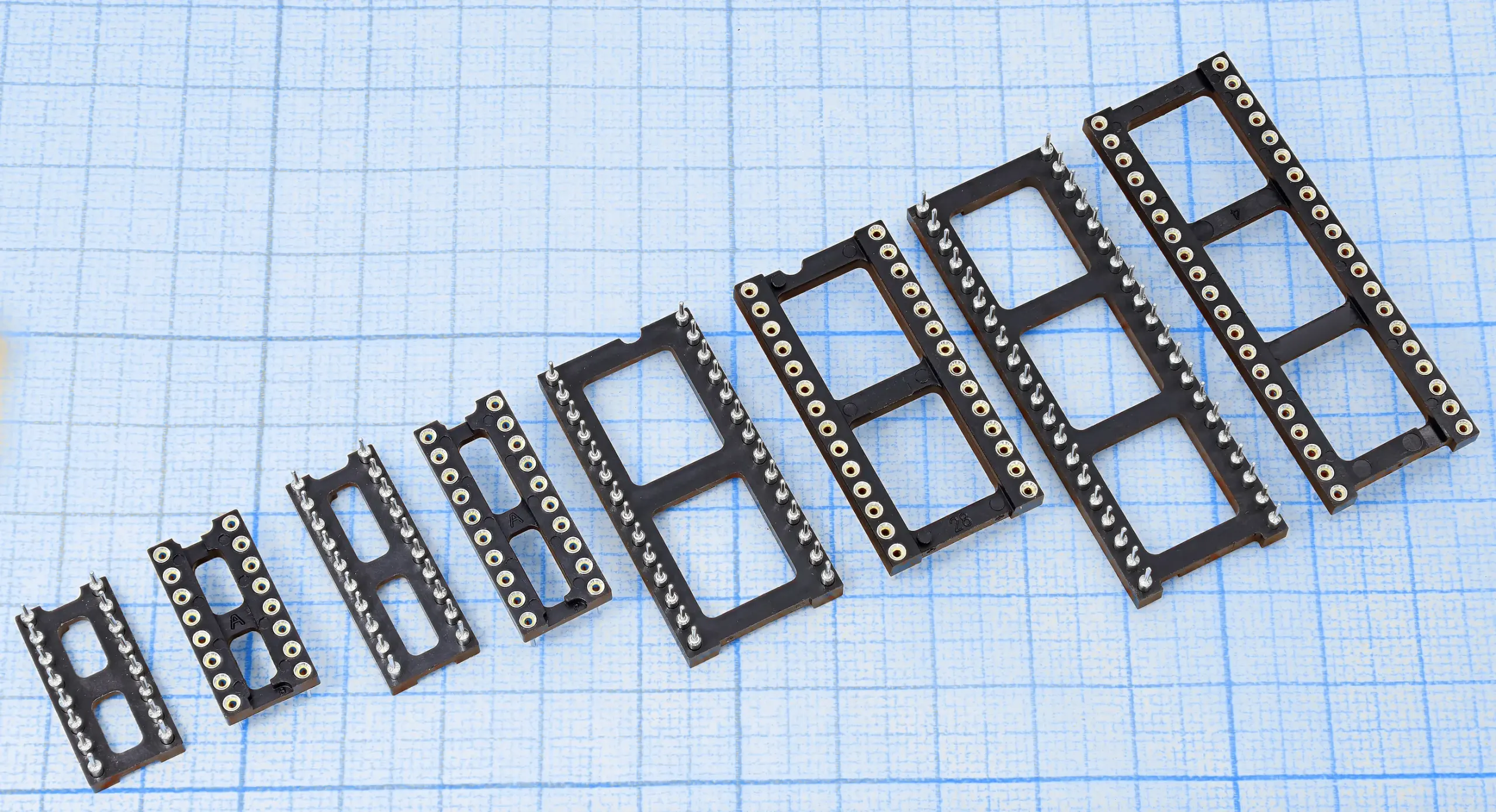
Definition
What is an IC socket?
An IC socket is a connector mounted on a circuit board that allows a compatible integrated circuit to be inserted and removed without directly soldering the IC itself to the board.
The socket is soldered in the IC’s place and the IC plugs into it, which makes the IC easy to replace, upgrade or test later. V Bright Electronics India handles IC socket requirements in India; share the package type and pin count, or a photo of the IC, and we’ll help identify suitable options.
Relationship
IC + IC socket
The IC is the component that does the work; the socket is the holder it plugs into. The socket must match the IC’s package, pin count and pin spacing — a 16-pin DIP IC needs a 16-pin DIP socket, for example.
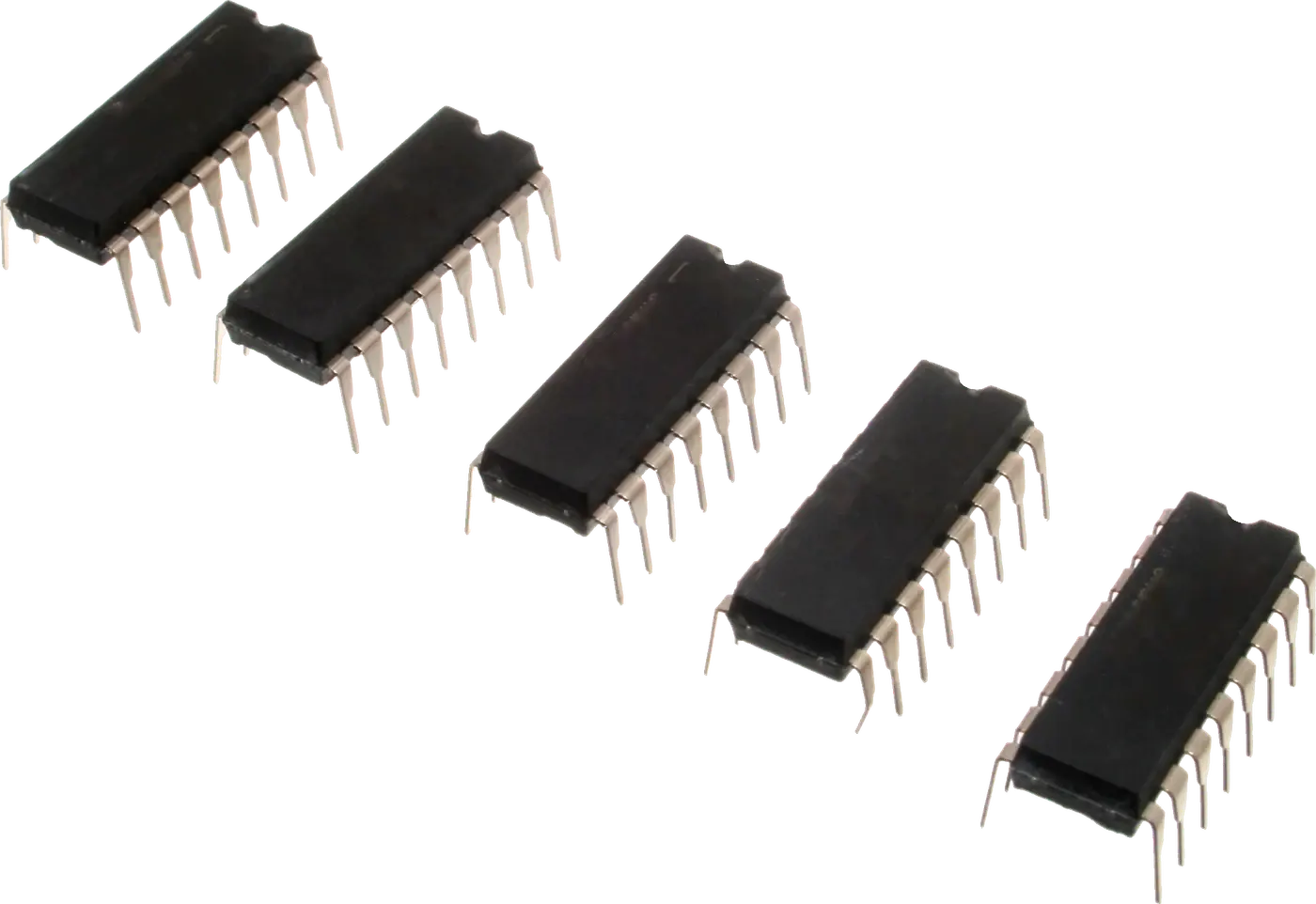
Integrated circuit
The chip itself — logic, timing, power or interface functions in one package.
View integrated circuits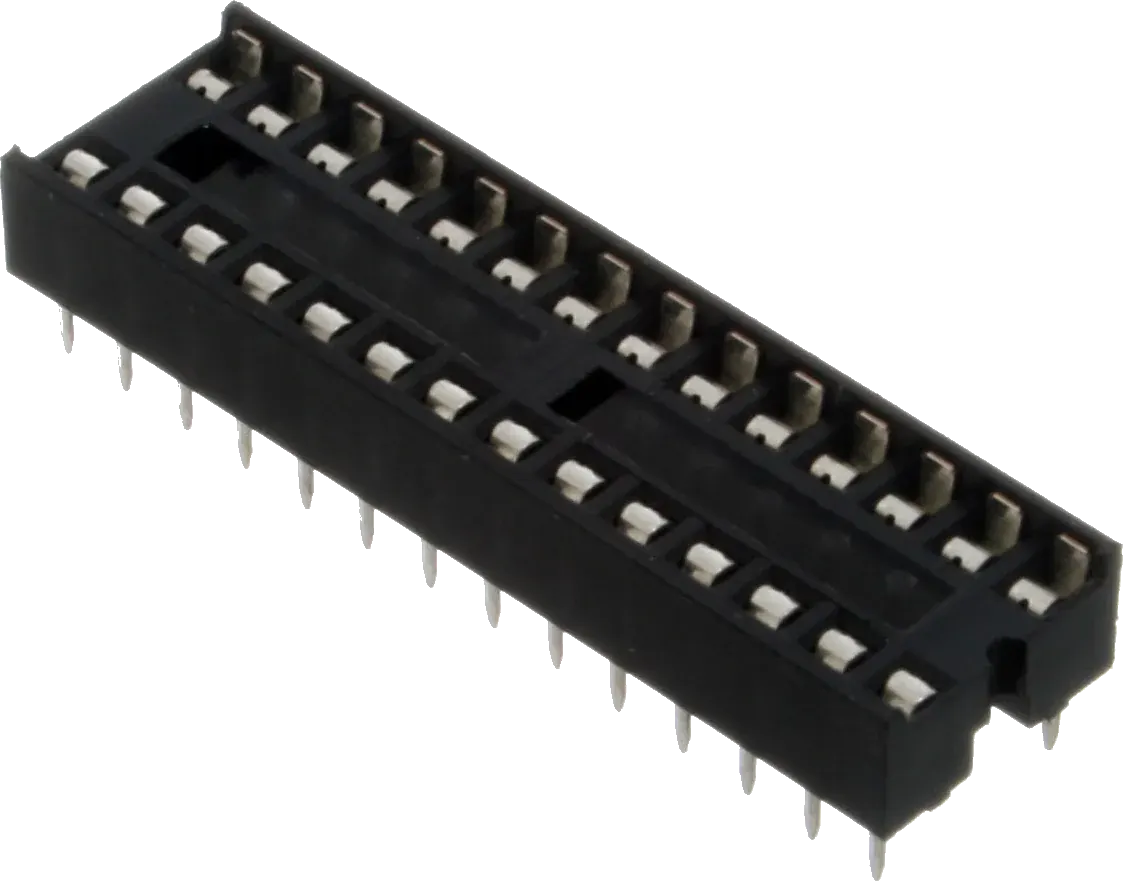
IC socket
Soldered to the board in the IC’s place, so the IC can be fitted and removed without soldering.
Must match
- Package type
- A DIP IC needs a DIP socket.
- Pin count
- A 16-pin IC needs a 16-pin socket.
- Pin spacing
- The pin pitch and row width must suit the IC.
Range
IC socket requirements
Requirements may include the categories below. The IC’s package and pin count decide the socket.
DIP IC sockets
Dual in-line sockets for through-hole DIP ICs.
Different pin counts
Sockets sized to the IC — the pin count must match the chip being fitted.
General IC socket requirements
Everyday sockets for boards, kits and equipment.
Replacement sockets
Matching a worn or damaged socket in existing equipment.
Prototype and service requirements
Sockets for prototypes, test setups and serviceable designs.
Applications
Where IC sockets are used
IC sockets are used wherever an IC may need to come out again. Common applications include:
Prototyping
Trying different ICs on a board without repeated soldering.
Development boards
Swapping or reprogramming chips during development.
Electronic repair
Fitting a socket so a replaced IC is easier to service in future.
Replaceable IC installations
Boards where an IC is expected to be changed or upgraded.
Testing
Inserting and checking ICs in test and evaluation setups.
Serviceable equipment
Equipment designed for quick IC replacement.
Selection
How to choose the correct IC socket
Match the socket to the IC. These details help identify the right one.
Not sure of the pin count or spacing? Send a photo of the IC or the board.WhatsApp a photo
IC or package type
The IC part number, or its package, such as DIP.
Number of pins
Count the IC’s pins — the socket must have the same number.
Socket type
If known, the style you need, such as standard or turned-pin contacts.
Pitch and row spacing
The spacing between pins and the width between rows, where relevant.
Quantity
How many sockets you need.
Photo or existing reference
A photo of the IC or the existing socket, or its part reference.

FAQ
Questions about IC sockets
Have a question about a specific part? Ask us with the part number or a photo.
Ask on WhatsAppWhy use an IC socket?
It lets an IC be fitted and removed without soldering it directly to the board. That makes replacement, upgrades and testing easier, and keeps soldering heat away from the IC.
How do I choose the correct socket?
Match the IC’s package, pin count and row spacing. For a DIP IC, count the pins and check whether it is a narrow or wide package — or simply send the IC part number.
Does the socket pin count have to match the IC?
Usually, yes — use a socket with the same number of pins as the IC, in the same package style. Share the IC part number if you are unsure.
Can a socket be added when replacing an IC?
Often, if there is space on the board and the design allows it. Share a photo of the board and the IC, and we’ll help identify a suitable socket.
What is the difference between standard and turned-pin sockets?
Standard sockets use stamped spring contacts, while turned-pin sockets use machined round contacts. Share the type if your design specifies one.
Can I request ICs and sockets together?
Yes. Send the IC part numbers and the matching sockets in one requirement or BOM, and V Bright Electronics India will help identify suitable options.
Need the right IC socket?
Send the IC or package type, pin count, a photo or the existing part reference and the quantity, and we’ll help identify a suitable socket.