
Electronic components
Relays
Reliable switching components for control, power and electronic applications.
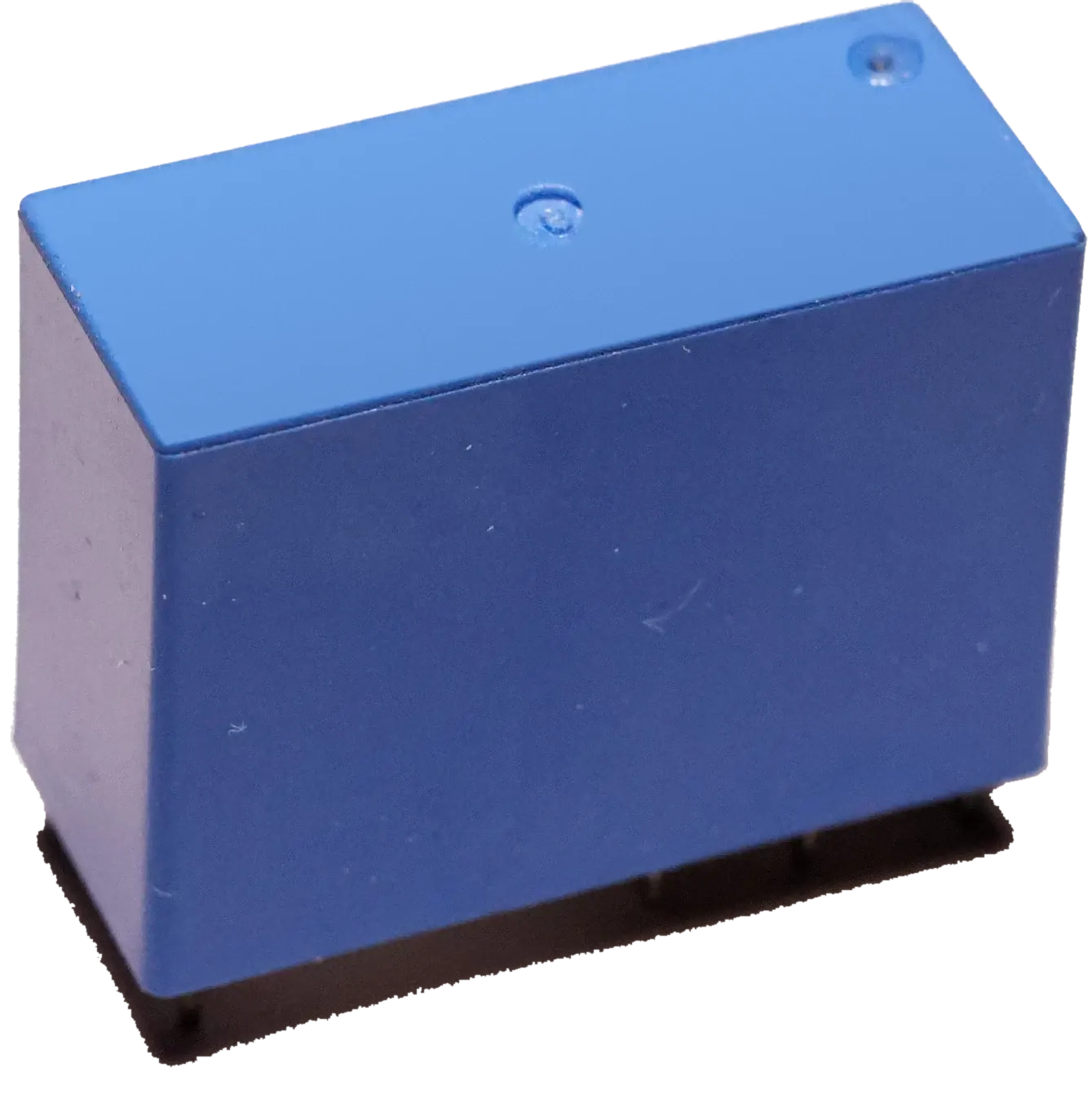
Definition
What is a relay?
A relay is an electrically operated switching device used to control one circuit using another electrical signal. A small control signal can switch a separate, often higher-power circuit, while keeping the two electrically isolated.
V Bright Electronics India supplies relays for control, power-switching and replacement requirements in India. Share the part number, a photo of the existing relay or the key specifications, and we’ll help identify suitable options.
How an electromechanical relay works
- SignalA control signal energises the relay’s coil.
- Magnetic fieldThe coil’s magnetic field pulls the armature, moving the contacts.
- SwitchingThe contacts open or close the separate load circuit.
Range
Types of relays
Relay requirements commonly include the types below. Many relays fit more than one description — the part number settles it.
Electromechanical relays
A coil and moving contacts switch the circuit — the most common relay type.
PCB relays
Compact relays with pins for mounting directly on a printed circuit board.
Power relays
Built to switch higher currents and loads than standard signal relays.
General control relays
Everyday relays for switching and interlocking in control circuits and panels.
Replacement relays
Matching an existing relay by its part number, markings or pin layout.
Applications
Where relays are used
Relays let low-power control electronics switch separate circuits. Common applications include:
Control circuits
Switching and interlocking in control panels and boards.
Power switching
Turning loads on and off from a low-power control signal.
Automation
Switching outputs from controllers, timers and sensors.
Lighting control
Switching lighting circuits from timers, sensors or controllers.
Power supplies
Switching and protection stages in supply and inverter circuits.
Electronic equipment
Switching functions inside appliances and electronic devices.
Repair and replacement
Replacing a worn or failed relay in existing equipment.
Selection
How to choose a relay
Check these details on the existing relay, its datasheet or the circuit. Together they decide whether a relay will fit and work safely.
Not sure? Send a clear photo showing the markings on the top and sides of the relay.WhatsApp a photo



FAQ
Questions about relays
Have a question about a specific part? Ask us with the part number or a photo.
Ask on WhatsAppHow do I identify the correct relay?
Start with the part number printed on the relay. If it is unreadable, note the coil voltage, contact configuration, contact rating, pin layout and size — or send a clear photo of the relay and the board it fits.
Why is coil voltage important?
The coil voltage must match the control signal that drives the relay. Too low and the relay may not switch reliably; too high and the coil can overheat or fail.
Can I send a photo of an existing relay?
Yes. A clear photo of the markings on the top and sides — and the pin side, if possible — helps identify a matching relay. Send it on WhatsApp or with your requirement.
Do you handle PCB relay requirements?
Yes. PCB relays are among the relay requirements V Bright Electronics India handles. Share the part number, or the coil voltage, contact configuration and pin layout.
Can I request relays in bulk?
Yes. Send the part numbers and quantities, or a complete BOM, for project, panel or production requirements.
What do normally open and normally closed mean?
Normally open (NO) contacts close when the coil is energised; normally closed (NC) contacts open. A changeover contact has both and switches between them.
Need a specific relay?
Send the part number, a photo of the existing relay, its specifications or the quantity you need, and we’ll help identify suitable options.