LED & display
LEDs
LED components for indication, lighting, display and electronic project requirements.
Definition
What is an LED?
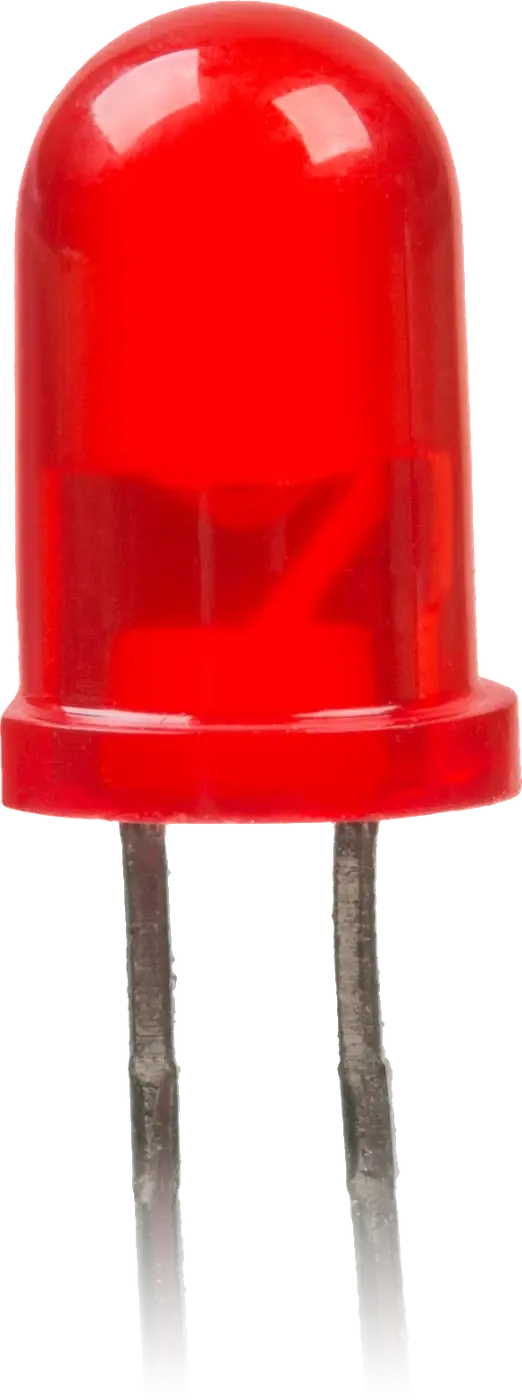
An LED, or light-emitting diode, is a semiconductor component that produces light when electrical current passes through it in the intended direction.
LEDs indicate status, light up displays and signs, and illuminate products and assemblies. V Bright Electronics India handles LED requirements in India — share the type, colour and size, or a photo of the existing LED, and we’ll help identify suitable options.
Range
LED requirements
Common LED requirements include the following. The type, colour and size together identify the LED you need.
Indicator LEDs
LEDs that show power, status or alerts on equipment and boards.
General-purpose LEDs
Everyday LEDs for electronic circuits, assemblies and lighting tasks.
Different colours
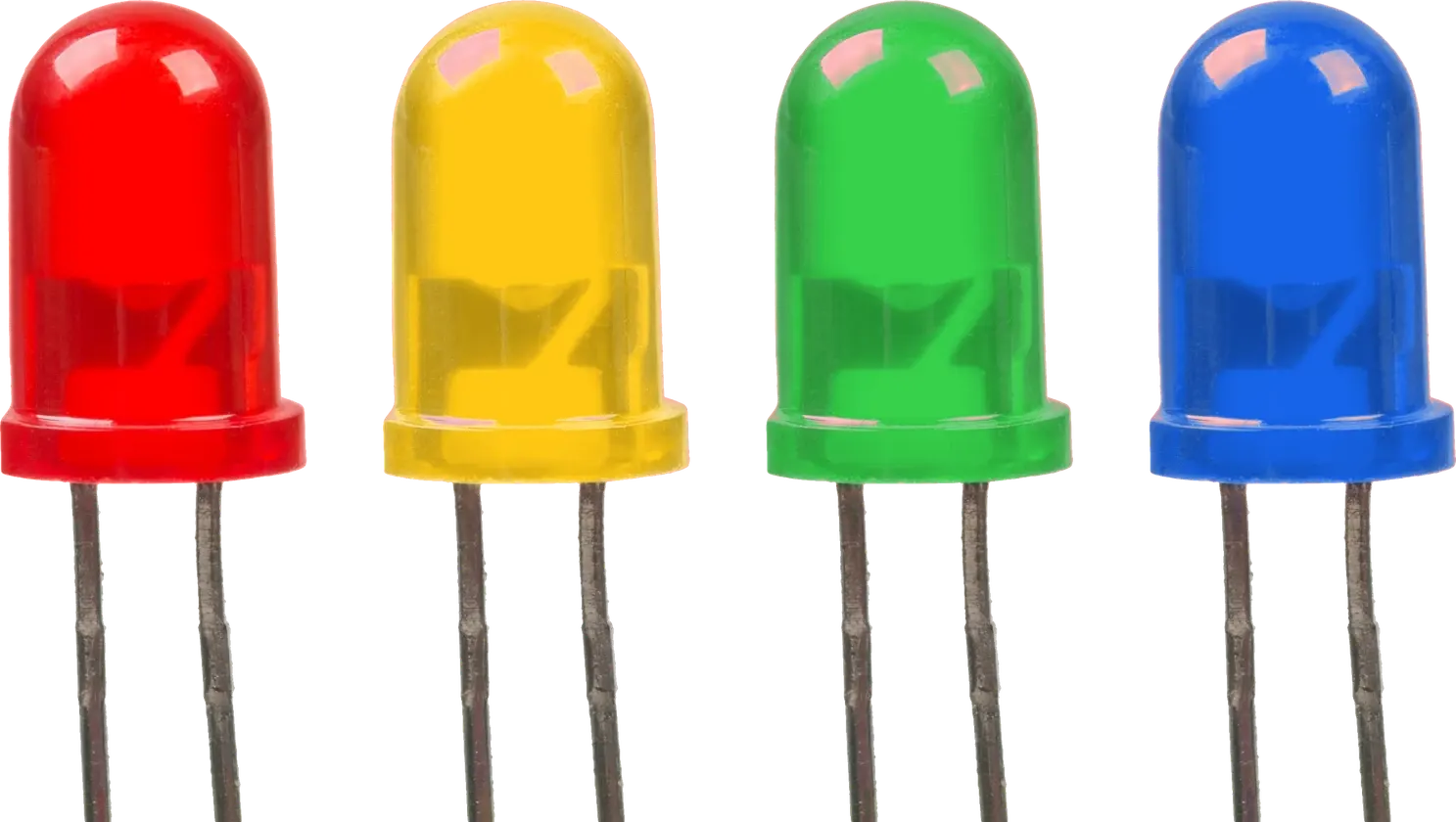
LEDs come in different colours of light and lens. Share the colour you need, or the existing LED’s colour.
Electronic project LEDs
LEDs for prototypes, learning kits, models and custom builds.
Replacement LEDs
Matching an existing LED by its size, colour and specification, or from a photo.
Different physical formats
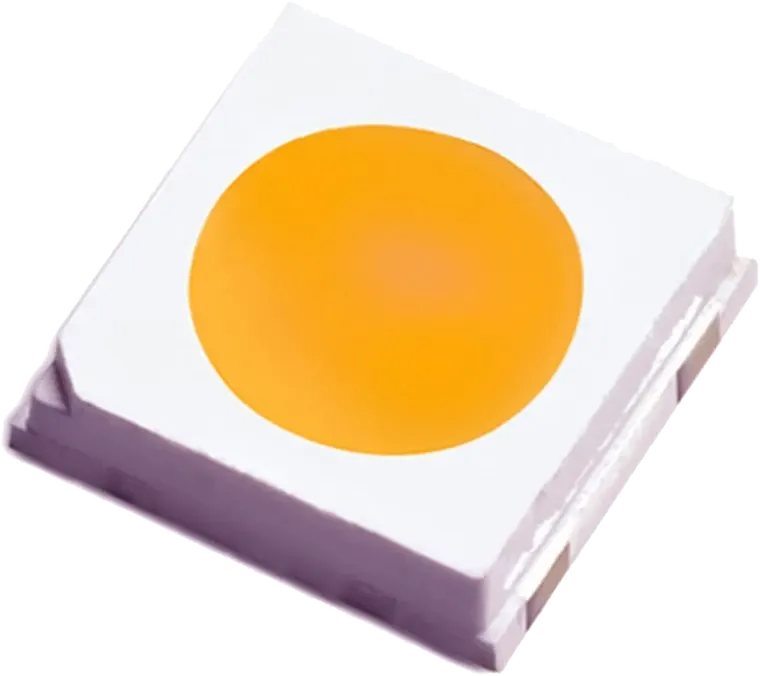
LEDs come in different sizes and lens shapes, through-hole or surface-mount.
View SMD & DIP LEDs
Identification
Which lead is which?
An LED only lights when it is connected the intended way round. On a typical through-hole LED, the longer lead is the anode (+) and a flat edge on the rim marks the cathode (−).
- Longer lead
- The anode (+). It connects towards the positive side of the circuit.
- Flat edge
- A flat on the rim of the lens marks the cathode (−) side.
- Trimmed leads
- If the leads have been cut, use the flat edge — or check the board marking where the LED was fitted.
- SMD LEDs
- Surface-mount LEDs usually mark the cathode with a notch, dot or line. Check the datasheet for the package.
Not sure about an LED you need to replace? Send a clear photo of the LED and the board it fits.
Applications
Where LEDs are used
LEDs appear on almost every piece of electronic equipment. Common applications include:
Electronic indicators
Power, status and alert lights on devices and boards.
Control panels
Indicators on switchgear, machinery and control equipment.
Displays
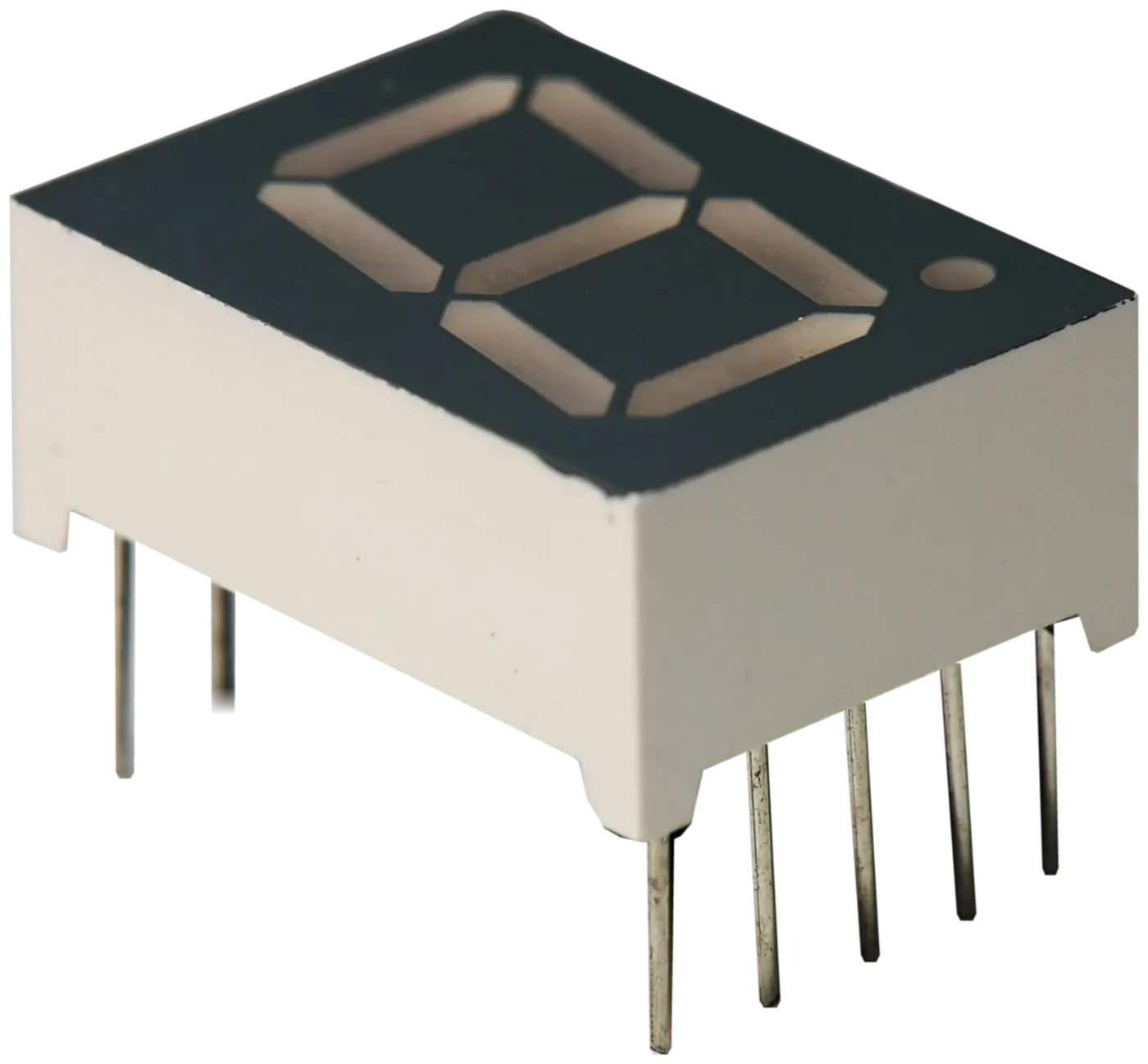
The light source in 7-segment displays and LED display boards.
Signage
Lit signs, boards and illuminated lettering.
Lighting assemblies
Small lighting products and backlit assemblies.
Electronic projects
Prototypes, kits and custom builds.
Repair and replacement
Replacing a failed or missing LED in existing equipment.
Selection
How do I identify the LED I need?
Share these details. For a replacement, the existing LED or a photo is often the quickest reference.

FAQ
Questions about LEDs
Have a question about a specific part? Ask us with the part number or a photo.
Ask on WhatsAppWhere are LEDs used?
In indicators on electronic equipment and control panels, in displays and signage, in lighting assemblies and in electronic projects. They are also a common replacement part in repairs.
How do I identify the LED I need?
Start with the type (through-hole or SMD), the colour and the size or package. Add the voltage and current if your circuit specifies them, plus the quantity. For a replacement, a photo of the existing LED helps.
Which lead of an LED is positive?
On a typical through-hole LED, the longer lead is the anode (+). The cathode (−) is the shorter lead, on the side with a flat edge on the rim.
Does an LED need a resistor?
Most LEDs need their current limited — usually with a series resistor or a constant-current driver — so they are not overdriven. The right value depends on the supply voltage and the LED’s specification.
Can I replace an LED with a different colour?
Often, if the size suits the board. Different colours can have different forward voltages, though, so the current in the circuit may change — check the specification first.
Can I send a list of LEDs with other components?
Yes. Send the LED types, colours and quantities in one list or BOM alongside any other components, and V Bright Electronics India will help identify suitable options.
Looking for a particular LED?
Send the type, colour, specification or a photo, and the quantity, and we’ll help identify suitable options.